The Craft

A craft that almost
didn't make it.

What happened to the trade, how I was trained in it, and what I build today.

The Decline
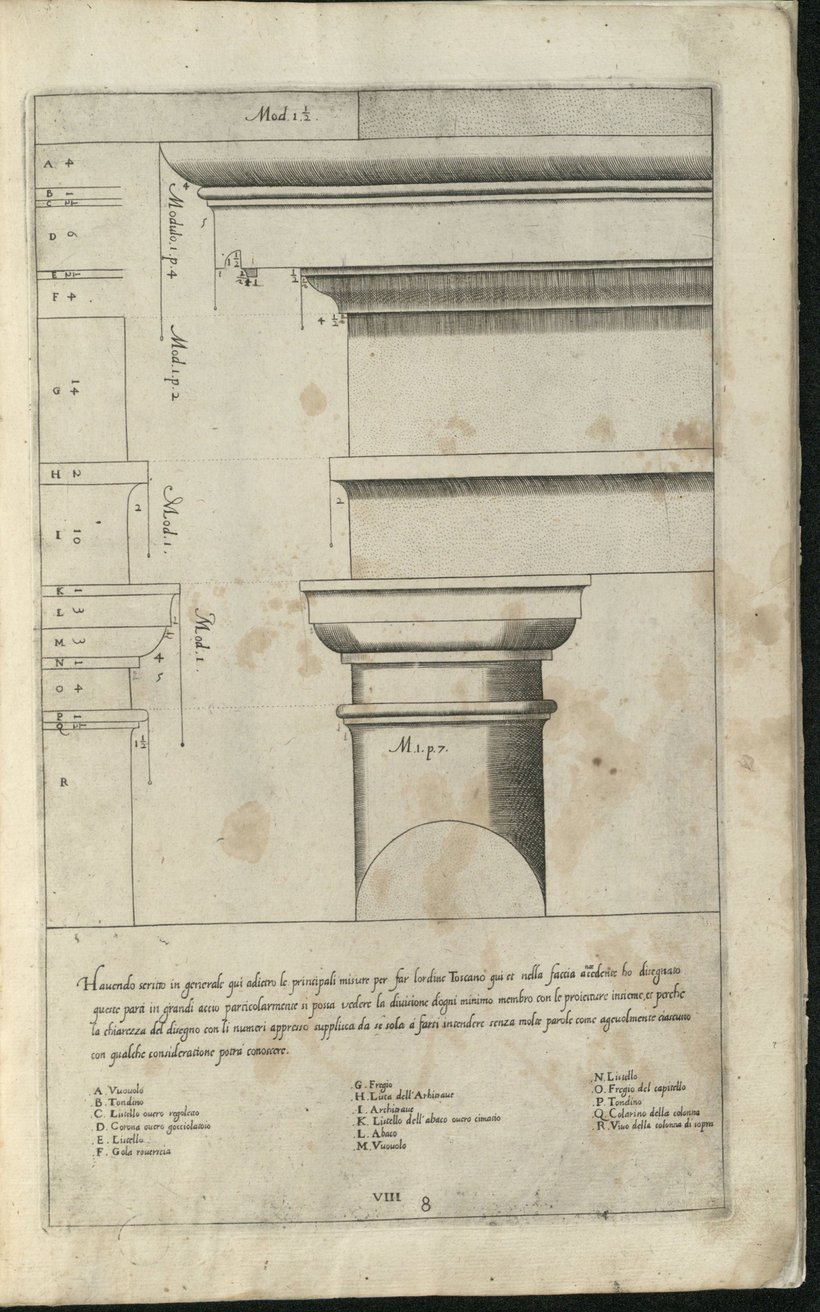
A sixteenth-century engraving of the Tuscan order with its measured proportions
The Tuscan order and its proportions, from a sixteenth-century architectural treatise.

Finish carpentry at its height was one of the great building trades. Fully paneled rooms, curved and laminated work, mouldings run and fitted entirely by hand were simply what a well-built house was made of, and the men who could do it trained for years to get there. Then the market moved out from under them. After the war, houses went up fast and cheap, and within a generation or two most people had come to believe that thin, stock, machine-made trim was all a nice house ever needed. The work had not stopped being beautiful, people had simply stopped paying for it, and that decline stretched across the better part of seventy-five years.

It wrecked a great many good men along the way, carpenters who had given their whole lives to a skill that almost no one valued anymore, and most of what they knew went to the grave with them. The trade came far closer to vanishing than most people realize. Only in the last few years has it begun to come back, but unfortunately now there are very few people left who were ever properly trained in traditional carpentry.

The Lineage
Kreg McMahon standing in a room of custom paneled millwork
Kreg McMahon, my master carpenter.

I am one of those few, because I was trained the old way. I came up as an apprentice under a master named Kreg McMahon, one of the last of the old carpenters, who had himself been brought up in the high work by a master before him. Kreg could do all of it, the paneled rooms, the laminated and bent work, the kind of millwork that had become rare, and he taught it to me the way it has always been passed down, hand to hand and on the job, over years rather than weekends.

Toward the end, when his hands had slowed, he would take the jobs, design them, and point me through every step while I did the building, which is about as thorough a way to learn a trade as there is. He passed just as the high-detail work he valued and chased was coming back into style, and the lineage he carried is the one I carry now.

The Work

What I build comes straight out of that training. I make traditional architectural millwork by hand, in my own shop, proportioned the way it was done when houses were still built to last, so that the work looks as though it belongs to the house rather than something stuck onto it. It is the same craft Kreg was taught, and his master before him, carried into a time that finally wants it back.

If that is the kind of work you are after, then we are going to get along well. If what you want is something fast and more or less like everyone else's, I am honestly not the right carpenter for it. But if you want something built by a single set of hands, correct in its proportion, and still right a hundred years from now, then that is exactly what I am here to do.

Start a Project

Build something worth keeping.

Send a note on what you are after, and I will take it from there.

Request a Consultation
Call or text (404) 725-0295